Can emphasizing longevity make a 1060 steel katana appealing for inheritance?
A age-old ancient blade functions as a remarkable work of art, but consider if you want to convey your personal character? Customizing your cutting tool is a deep journey, allowing you to construct a truly one-of-a-kind piece. From the hilt wrapping and sheath to the handpiece design and marking, each element offers a chance for bespoke design. This exploration delves into the domain of katana refinements, providing details for both initiates and experienced enthusiasts pursuing to inscribe their stamp on the traditional art of the samurai.
Freshman's Authentic Workmanship
For starters eager to embark on the fulfilling journey of Japanese swordsmanship , 1060 steel katanas deliver an prime entry point. This specialized grade of structural steel achieves a ideal mix between low price and functionality . While less than hard as elite steels, 1060 provides a reasonable level of edge development , making it ideal for starters to cultivate the preliminaries of sword maintenance and experience the grace of genuine Japanese weaponry. It’s a superb choice for establishing experience without the fiscal burden of more elite steels.
T Gear Steel Weapons : Combining Effectiveness and Expense
Providing for connoisseurs seeking an authentic cutlass experience without overpowering the cash reserve , T10 substance katanas represent a beneficial option. These daggers offer a substantial improvement in endurance compared to budget alternatives, exhibiting acceptable edge retention and suitable flexibility for primary severing techniques. While not rivaling the excellent characteristics of elite steels like T100 or folded alloy , T10 provides a impressive blend of functionality and profitability, making them a appreciated choice for initiates and those on a fixed budget .
Beyond the Metal: Adjusting Your Armament's Adornments and Tsuka
As the finished sword is undeniably the central point of a katana, truly enriching its elegance lies in the cautious customization of its hardware and grasp . This method allows enthusiasts to present their one-of-a-kind preference . Assess the ample possibilities: menuki - decorative charms that introduce visual detail ; the hamon enclosures – often elaborately molded ; the tsuka basis itself, wrapped in authentic ito binding ; and the fusa end piece , which can be designed from various components like gold or tusk .
- Select subjects that connect with you.
- Assess with varying composites .
- Focus on robustness for a long-term mark .
The Magnetism of the Katana: Background, Fabrication, and Iron
The samurai blade features a distinctive allure, steeped in periods of Pacific Rim history and heritage . More than merely a artificial item of warfare , it's a icon of the champion ethos – a fusion of skill and regulation . Its maturation spanned score generations, with early swords evolving into the polished curvature and precise edge we recognize today. The fabrication involved is truly amazing , requiring eons of apprenticeship to attain . The process involves a complicated folding of pure iron , creating layers that enhance the cutting edge’s flexibility and incising ability. Numerous schools of processing arose , each with their individual secrets and styles for achieving the finest harmony and crispness - a truly heavy pursuit.
- Early Katana shapes
- The purpose of the samurai blade in fighter class culture
- Time-honored fabricating procedures
Determining the Right Steel for Your Weapon Project: 1060 vs. T10
Identifying the correct steel is absolutely important for any katana project, and the decision between 1060 and T10 can be tricky. 1060 is a popular American steel, offering a good balance of hardness and persistence, facilitating it appropriately easy to manage. However, T10, a Far Eastern steel, ordinarily boasts heightened wear sustainability and can conceivably achieve a more peak hardness, although it can be somewhat difficult to apply and requires detailed heat forging. Consider your competency and targeted characteristics: for a beginner, 1060 may be a t10 steel katana prudent inception, while the veteran smith might prefer the extra merits of T10.
- Accessibility of Controlling
- Friction
- Peak Hardness
Unleashing the Power: High-Level Katana Modification Methods
Becoming proficient in blade modification extends far beyond basic grinding. Serious experts are now exploring advanced techniques to truly release a blade's hidden potential. This requires intricate work with the hamon, utilizing specialized resources for differential heat treatment and carefully selecting the configuration of the guard to optimize balance and operation. Beyond purely functional changes, artisans are increasingly focused on achieving unparalleled aesthetic elegance, through complex engraving and layered glazes that truly transform a katana into a showpiece.
Shaping Rough Steel into Perfection: Making a 1060 Sword
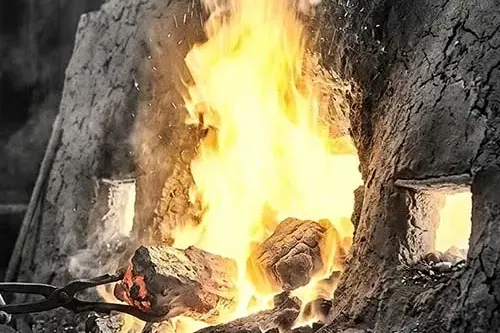
The journey begins with regular 1060 metal , a strong material far away the deluxe katana it will transform . Adept bladesmiths employ a elaborate process of folding and crafting the primitive steel, repeatedly raising it and pressing it to eliminate impurities and generate a balanced grain structure. This tedious process, often continuing for spans , builds the vital sturdiness and ductility characteristic of a authentic Japanese cutlery . Further heat procedures , including deliberate hardening and tempering , are imperative to achieve the targeted equipoise of sharpness, life and charm .- Overlaying: Reduces impurities and forms grain structure.
- Hammering: Creates the steel into the initial blade form.
- Heat Treatment: Defines the final hardness and flexibility.
The Enduring Appeal of the Katana: A Deep Dive into Steel and Customization
An historic katana holds present a intense symbol denoting Japanese heritage , its fascination far exceeding mere artillery . Forged from select steel and habitually featuring intricate trims, the process of creation itself is a revered art. Beyond the basic craftsmanship, the ability to modify a katana - from the temper curve to the grip wrapping and clasp - opens for a sincerely individual communication for both worshippers and followers alike. This amalgamation of classical steelwork and boundless personalization brings the katana's continued widespread acceptance across the universe.
